
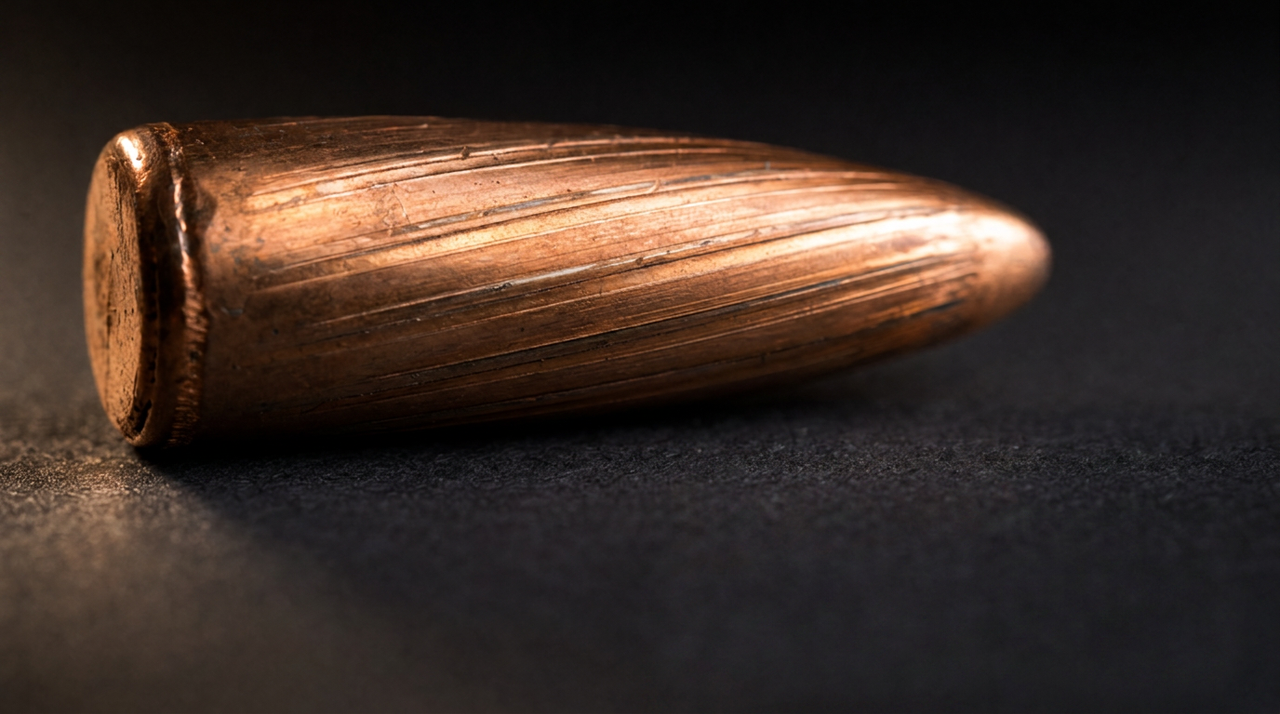
The Rifling Marks on Your Bullet Tell a Story
Aug 28th 2026
The Rifling Marks on Your Bullet Tell a Story
How Rifling Marks Are Created
Rifling consists of raised areas (lands) and cut areas (grooves) that spiral down the barrel's interior. When a bullet enters the barrel, the lands bite into the bullet's surface, engraving parallel spiral marks as they spin and push the bullet forward.
The grooves provide the channels for the bullet to ride in, and the lands provide the grip that imparts spin. This spin stabilizes the bullet in flight, keeping it point-forward through aerodynamic forces.
The marks left on the bullet are essentially a fingerprint of your barrel's interior. Every barrel produces a slightly different pattern based on its rifling type, twist rate, bore diameter, and condition.
What Normal Rifling Marks Look Like
A bullet fired through a healthy barrel will show clean, evenly spaced engraving marks that spiral around the bullet at a consistent angle. The marks should be:
- Uniform in depth. Each land mark should be roughly the same depth as the others. Uneven depth suggests uneven bore dimensions.
- Consistent in width. The land marks should all be approximately the same width. Variation suggests inconsistent rifling or bore wear.
- Sharp and well-defined. Clean edges on the engraving marks indicate the lands are in good condition. Fuzzy or ragged edges suggest worn or damaged rifling.
- Evenly spaced. The marks should be distributed symmetrically around the bullet's circumference.
If you recover a bullet from a sand trap or water tank and it shows these characteristics, your barrel is in good shape and the bullet is engaging the rifling properly.
Asymmetric Engraving: What It Means
When the rifling marks on one side of the bullet are deeper or wider than the marks on the opposite side, the bullet isn't centered in the bore. This is called asymmetric engraving, and it has several possible causes.
Throat erosion. If the throat (the area where the barrel first contacts the bullet) is worn unevenly, the bullet enters the rifling at a slight angle. One side engages the lands more aggressively than the other. This is common in barrels with several thousand rounds through them, especially in high-pressure rifle cartridges.
Bullet diameter mismatch. If the bullet is slightly undersized for the bore, it can travel a short distance before fully engaging the rifling. During that distance, it can shift off-center. The resulting engraving pattern will be uneven.
Crown damage. A damaged muzzle crown can cause the bullet to exit the barrel unevenly, but this typically shows up more as accuracy degradation than as visible changes to the bullet's engraving pattern.
Copper Fouling and What It Reveals
When you inspect your bore, you might see copper-colored streaks in the rifling. This is copper from the bullet's jacket deposited on the barrel steel. Some copper fouling is normal. Excessive fouling tells a story.
Moderate copper fouling (a thin, even layer) is normal and can actually improve accuracy slightly by creating a uniform surface for subsequent bullets to ride on.
Heavy copper buildup concentrated in specific areas suggests rough spots in the bore. Microscopic tool marks, pitting, or imperfections in the barrel steel create points where copper is stripped from the jacket more aggressively. These spots create inconsistent bullet contact and degrade accuracy.
Copper fouling in the throat is common because this is where the bullet first contacts the rifling under high pressure. Heavy throat fouling that returns quickly after cleaning can indicate throat erosion.
Gas Cutting Marks
In some cases, you'll see marks on the bullet's base or rear section that aren't from the rifling. These are gas cutting marks, created by propellant gas leaking past the bullet before it fully engages the rifling.
Gas cutting happens when there's a gap between the bullet and the barrel at the moment of firing. The high-pressure gas exploits this gap, eroding the bullet's base as it passes by. This causes:
- Inconsistent bullet launch as gas bypasses the bullet unevenly
- Slight bullet damage that can affect flight stability
- Increased velocity variation from shot to shot
Gas cutting is more common in revolver cartridges (where the gap between cylinder and barrel allows gas escape), in rifles with worn throats where the bullet has to "jump" to reach the rifling, and with undersized bullets that don't seal the bore immediately.
Twist Rate and Stability Indicators
The angle of the rifling marks tells you the twist rate of the barrel. Steeper angles indicate a faster twist. Shallower angles indicate a slower twist.
More importantly, the engraving pattern can tell you whether your bullet is properly stabilized:
Clean, uniform marks with consistent depth indicate the bullet is engaging the rifling symmetrically and spinning as intended. The bullet is stable.
Marks that show "skipping" or intermittent contact suggest the bullet isn't fully engaging the lands. This can happen when a short, lightweight bullet is fired through a fast-twist barrel. The bullet "rattles" slightly as the twist tries to impart more spin than the bullet's surface area can absorb.
Keyholing at the target (oval-shaped holes instead of round ones) combined with uneven rifling marks is a clear sign of instability. The bullet isn't spinning fast enough to maintain a point-forward orientation. This usually means the twist rate is too slow for the bullet weight, or the bullet is damaged before it exits the barrel.
Reading Your Barrel's Health Over Time
If you periodically recover and examine fired bullets from the same barrel (using a sand trap or other bullet recovery method), you can track your barrel's condition over its lifespan.
New barrel (0 to 500 rounds): Rifling marks should be sharp, uniform, and consistent. This is your baseline.
Mid-life barrel (2,000 to 5,000 rounds, depending on caliber): Marks may show slight softening at the edges as the lands begin to wear. Throat area marks may be shallower than marks farther down the bore, indicating early throat erosion.
Worn barrel (5,000+ rounds for rifle, 10,000+ for pistol): Marks become increasingly shallow and less defined. Asymmetric engraving may appear as the throat erodes unevenly. This is the barrel telling you it's approaching end of life for precision work.
This isn't something you need to do regularly. But checking once a year or once every few thousand rounds gives you data that supplements group size testing and velocity tracking.
Practical Application
You don't need a lab to read rifling marks. A few simple steps:
Recover bullets safely. A wet phone book stack, a bucket of sand, or a commercial bullet trap works. Never try to catch bullets in anything that could cause a ricochet.
Compare bullets from the same load. Shoot 5 rounds of the same ammunition and recover them. Compare the marks. They should be similar. Significant variation between bullets from the same load suggests a bore issue.
Compare to previous samples. If you saved a bullet from 1,000 rounds ago, compare the mark depth and definition. Visible degradation over time confirms barrel wear.
Use a magnifying glass or loupe. The details of rifling marks are small. A 10x loupe lets you see engraving depth, edge quality, and surface condition clearly.
The Bottom Line
The marks on your fired bullets are data. They tell you whether your barrel is in good condition, whether your ammunition is properly matched to your bore, and whether wear is progressing in a way that affects performance.
Most shooters will never examine a fired bullet. But for those who want to understand what's happening inside their barrel, and especially for those diagnosing accuracy problems, rifling marks are one of the most informative diagnostic tools available.
Your barrel writes its condition on every bullet that passes through it. All you have to do is read it.
Ammunition That Works With Your Barrel
IKONICK USA ammunition uses precision-diameter projectiles designed to engage rifling consistently across standard barrel specifications.
Shop Ammunition