
Choosing Defensive Ammo for Home Defense: A Room-by-Room Guide
Nov 6th 2026
Choosing Defensive Ammo for Home Defense: A Room-by-Room Guide
Why Location Matters
A bullet that misses or over-penetrates doesn't stop at the walls. It continues through drywall, insulation, and potentially into the next room where a family member is sleeping. Your defensive ammunition choice needs to account for what's behind the threat, and that changes depending on where you are in the house.
This isn't about choosing a different load for every room. It's about understanding how your chosen ammunition behaves through the materials in your home so you can make an informed decision about which load gives you the best combination of stopping power and reduced risk to people in other rooms.
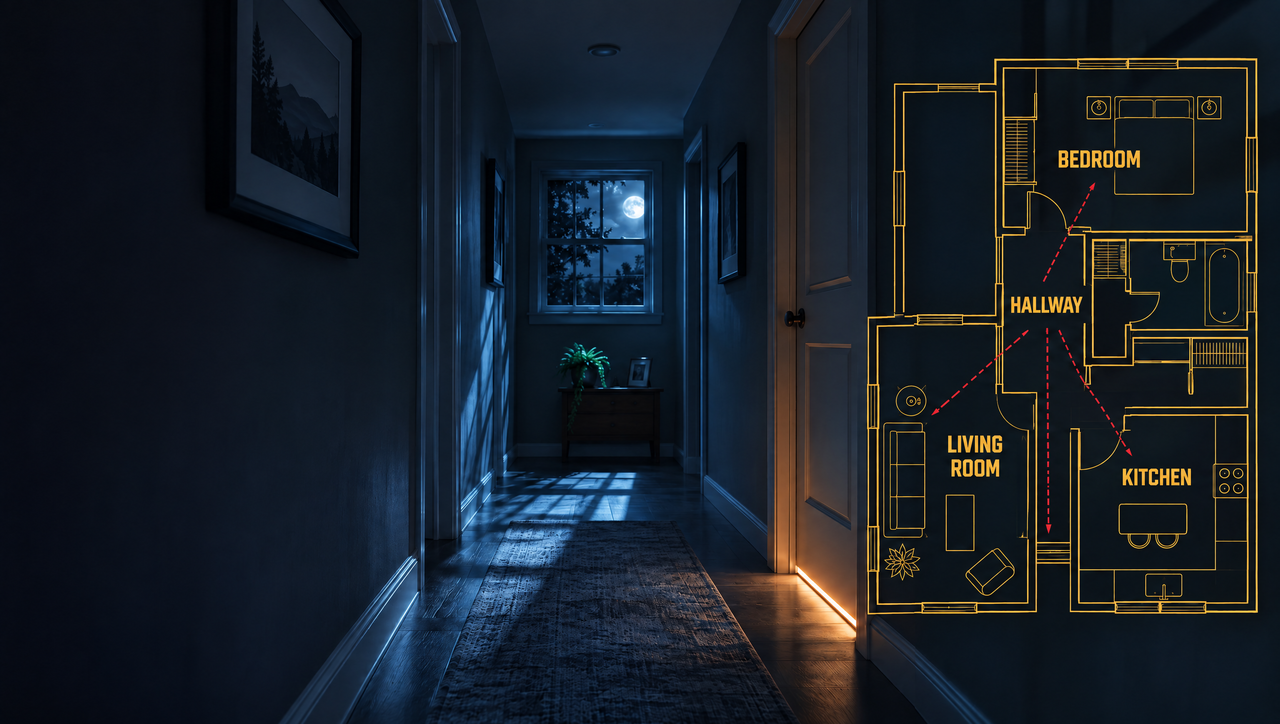
The Bedroom
For most people, the bedroom is the most likely defensive scenario. You hear something in the middle of the night, retrieve your firearm, and engage a threat from a relatively short distance.
The primary concern here is over-penetration through interior walls. Standard drywall provides almost no ballistic resistance. Two sheets of half-inch drywall (one interior wall) will not stop most handgun ammunition, including hollow points that have expanded.
For bedroom defense, a quality hollow point that expands reliably and stays within the FBI penetration range (12 to 18 inches in gel) is the standard recommendation. The expansion transfers energy into the target rather than carrying it through, which reduces (but does not eliminate) the risk of hitting someone in the next room.
The Hallway
Hallways create longer engagement distances and narrow lines of fire. A miss in a hallway sends a bullet down a channel that may terminate at another bedroom door or an exterior wall facing a neighbor's house.
The same hollow point that works in the bedroom works here, but the stakes of a miss are potentially higher. This is less an ammunition question and more a training question: can you make accurate shots under stress at hallway distances (typically 10 to 20 feet)?
Common Areas (Living Room, Kitchen)
These spaces typically have more exterior walls, more furniture that can provide concealment, and more angles that lead to areas outside the home. A bullet that passes through an exterior wall enters the neighborhood.
In these spaces, the over-penetration concern extends beyond your own family to your neighbors. Hollow points remain the right choice, but shot placement becomes even more critical because the consequences of a miss extend beyond your property.
What About Frangible Ammunition?
Frangible ammunition is designed to break apart on contact with hard surfaces, which sounds ideal for home defense. In practice, frangible rounds create trade-offs. They reduce over-penetration risk through walls significantly, but they also reduce penetration depth in soft tissue. Some frangible loads may not reach the FBI minimum of 12 inches, which means they may not reliably stop a threat.
Frangible can be a valid choice if your home layout creates extreme over-penetration risk (thin walls, adjacent apartments, children's rooms sharing walls with likely engagement areas). But for most homeowners, a quality expanding hollow point provides the best balance of stopping power and managed penetration.
Rifles for Home Defense: The Penetration Paradox
AR-15 rifles in .223/5.56 are popular home defense firearms, and there's a counterintuitive truth about their penetration: lightweight, high-velocity .223 rounds often penetrate fewer interior walls than 9mm handgun rounds.
This happens because the lightweight .223 bullet fragments and destabilizes when it hits drywall, losing energy rapidly. A heavier, slower 9mm bullet (or .45 ACP) tends to maintain its shape and momentum through multiple walls.
If over-penetration is your primary concern and you're comfortable with a rifle platform for home defense, a .223/5.56 with a 55gr frangible or lightweight hollow point can actually be safer for adjacent rooms than a 9mm handgun round. This is well-documented in barrier testing.
The Universal Rules
Regardless of where in your home a defensive situation occurs, certain principles apply to your ammunition choice. Use quality hollow points designed for controlled expansion and penetration in the 12 to 18 inch range. Avoid FMJ for home defense since its over-penetration risk is unacceptable in a residential environment. Test your chosen defensive load in your firearm for reliability. Know your home's layout and identify where family members sleep relative to likely engagement areas.
The Bottom Line
Your home defense ammunition needs to do two things: stop the threat and not endanger the people you're trying to protect. Those requirements are in tension, and the best ammunition choice is the one that balances both based on your specific home, your specific firearm, and your specific layout.
Walk your home. Think about angles of fire from likely defensive positions. Identify where a missed or over-penetrating round would go. Then choose ammunition that accounts for those realities.
Defend your home. Protect everyone in it. Your ammunition choice is part of both.
Defensive Ammunition Built for Real Conditions
IKONICK USA defensive loads are engineered for consistent expansion and controlled penetration. Built for the scenarios that actually happen.
Shop Ammunition