
Building Your First Ammo Order: A Guide for New Shooters
Aug 14th 2026
Building Your First Ammo Order: A Guide for New Shooters
Step 1: Know Your Caliber
Check your firearm's manual or the markings on the barrel and slide. Your gun is chambered for a specific cartridge, and you need to buy that exact cartridge. Not something close. Not something that sounds similar. The exact one.
Common calibers for first-time owners:
- 9mm Luger (9x19mm Parabellum): The most popular handgun caliber. Affordable to shoot, manageable recoil, widely available.
- .45 ACP: Larger, heavier bullet. More recoil than 9mm. Less capacity in the magazine.
- .380 ACP: Common in small pocket pistols. Lower recoil, lower power than 9mm.
- .223 Remington / 5.56 NATO: Standard AR-15 rifle cartridge. If your rifle is chambered in 5.56, it can safely fire .223. Check your manual before doing the reverse.
- .308 Winchester / 7.62x51 NATO: Common in full-size rifles and AR-10 platforms.
If you're unsure, take the gun to a local gun shop and ask. Getting this wrong isn't just a waste of money; it can be dangerous.
Step 2: Understand the Two Types You Need
As a new shooter, you need two categories of ammunition:
Training ammunition (FMJ). Full Metal Jacket ammunition is your everyday range ammo. It's designed to feed reliably, punch clean holes in paper, and cost as little as possible per round. This is what you'll shoot the most of, and it's where you'll spend the majority of your ammunition budget.
Defensive ammunition (hollow point). If your gun is for home defense or concealed carry, you need hollow point ammunition loaded in the gun and in your spare magazine. This is designed to expand on impact and is significantly more expensive per round than FMJ. You'll buy much less of it.
If your gun is exclusively for range use, you only need FMJ. If it has any defensive role, you need both.
Why Not Just Use Hollow Points for Everything?
Cost. Defensive hollow points typically run two to three times the price of FMJ training ammunition. At 200 rounds per range session, that adds up fast. You train with affordable FMJ and carry the premium stuff.
The one exception: you should periodically shoot your defensive ammunition to confirm it functions in your gun and to know what the recoil feels like. One box (20 rounds) every few months is enough for this.
Step 3: Choose Your Grain Weight
Grain weight is the bullet's mass. For your first order, keep it simple:
9mm: Start with 115gr or 124gr FMJ for training. Both are standard, widely available, and affordable. 115gr is typically the cheapest. 124gr is a popular middle ground that some shooters prefer for a slightly softer recoil feel.
.45 ACP: 230gr FMJ is the standard. It's the most common and most affordable option.
.380 ACP: 95gr FMJ is standard for training.
.223 / 5.56: 55gr FMJ is the standard range load. Affordable and available everywhere.
For your defensive ammunition, the grain weight matters more, but your first priority is finding a quality hollow point that functions reliably in your specific gun. Grain weight optimization comes later, after you have more experience and a better understanding of what works in your firearm.
Step 4: Decide How Much to Buy
Here's a practical first order for a new handgun owner who plans to train regularly:
Starter Order: Handgun (9mm example)
Training FMJ: 500 rounds. This covers two to three range sessions and gives you enough volume to start building fundamentals without running out mid-session.
Defensive HP: 2 boxes (40 rounds). One box to load your carry gun and spare magazine. One box to test through the gun at the range to confirm reliability.
Total first order: 540 rounds
Starter Order: Rifle (.223/5.56 example)
Training FMJ: 200 to 500 rounds, depending on budget. Rifle ammunition costs more per round than pistol, so start where your budget allows.
Defensive/HD: If your rifle serves a home defense role, 1 to 2 boxes (20 to 40 rounds) of a quality soft point or hollow point designed for your barrel length.
Can you buy less? Sure. But running out of ammunition mid-session means you either stop training or make an unplanned trip. Having enough on hand to complete a full practice session without worrying about your supply makes every range visit more productive.
Step 5: Test Before You Trust
Before you load defensive ammunition into your carry gun and trust your life to it, you need to shoot it through that specific gun.
Minimum test: 1 box (20 rounds) without a single malfunction. Load the magazine, shoot them all, and confirm the gun feeds, fires, extracts, and ejects every round without issue.
Better test: 2 to 3 boxes (40 to 60 rounds) without a malfunction. This gives you more confidence, especially if you mix the defensive rounds in with your training ammunition to simulate real-world loading conditions.
If you experience any malfunctions with your chosen defensive load, try a different brand or bullet weight. Not every ammunition works perfectly in every gun. Finding the one that does is part of the process.
Step 6: Establish a Training Baseline
Your first few range sessions should focus on fundamentals, not speed or complexity. A typical new-shooter session might look like this:
- Rounds per session: 150 to 200 for handgun, 50 to 100 for rifle
- Frequency: Once or twice per month to build skills consistently
- Focus: Grip, sight alignment, trigger press, and safe handling
At that pace, 500 rounds of training ammunition lasts roughly three to four handgun sessions. When you're halfway through your supply, order more so you don't run out between range visits.
What to Skip on Your First Order
You don't need everything right away. Some things can wait:
+P ammunition. Higher-pressure loads are unnecessary for a new shooter. Standard pressure ammunition in any caliber is effective for both training and defense. Master the fundamentals with standard loads first.
Specialty loads. Frangible, tracer, subsonic, and other specialty ammunition serves specific purposes. None of them are what you need right now.
Bulk cases of 1,000+. Wait until you've confirmed your gun runs a specific load reliably before buying in bulk. Buying 1,000 rounds of something your gun doesn't like is an expensive lesson.
The most expensive premium brand. Premium defensive ammunition from established manufacturers works, but there's a point of diminishing returns. A mid-range defensive load that functions in your gun and meets penetration and expansion standards is more than adequate.
How to Save Money Without Cutting Corners
Ammunition is an ongoing expense. Here's how to manage it:
Buy in quantity when you find a good price. Once you've confirmed your gun likes a specific training load, buying 500 or 1,000 rounds at a time is almost always cheaper per round than buying one box at a time.
Watch for sales and promotions. Ammunition prices fluctuate. Holiday sales, manufacturer promotions, and seasonal deals can save 10 to 20% on training ammunition.
Don't mix training and defensive ammunition costs. Your training budget and your defensive ammunition budget are separate. Train with affordable FMJ. Spend more per round on the smaller quantity of defensive ammunition that you'll rotate once or twice a year.
Store ammunition properly. Keep it in a cool, dry place. Ammunition stored correctly lasts for decades. Ammunition stored in a hot garage or damp basement degrades faster, which means you're replacing it sooner.
Your First Order Checklist
Before you place your order, confirm:
- Caliber matches your gun exactly (check the barrel markings, not your memory)
- You have enough training FMJ for at least two full range sessions (300 to 500 rounds for handgun)
- You have defensive HP if your gun serves a defensive purpose (at least 2 boxes)
- You've budgeted to test the defensive load (1 box minimum, 2 to 3 preferred) before trusting it
- Shipping is legal to your state (some states have restrictions on online ammunition purchases; verify before ordering)
The Bottom Line
Your first ammunition order doesn't need to be complicated. Match the caliber to your gun. Buy FMJ for training and hollow points for defense. Start with enough to train productively and test your defensive load. Skip the specialty stuff for now.
The goal is to get on the range with enough ammunition to build real skills without overthinking the process. You'll learn what works best in your gun over time. For now, get the basics right and start shooting.
The best ammunition is the ammunition you train with consistently. Start there.
Start With American-Made Quality
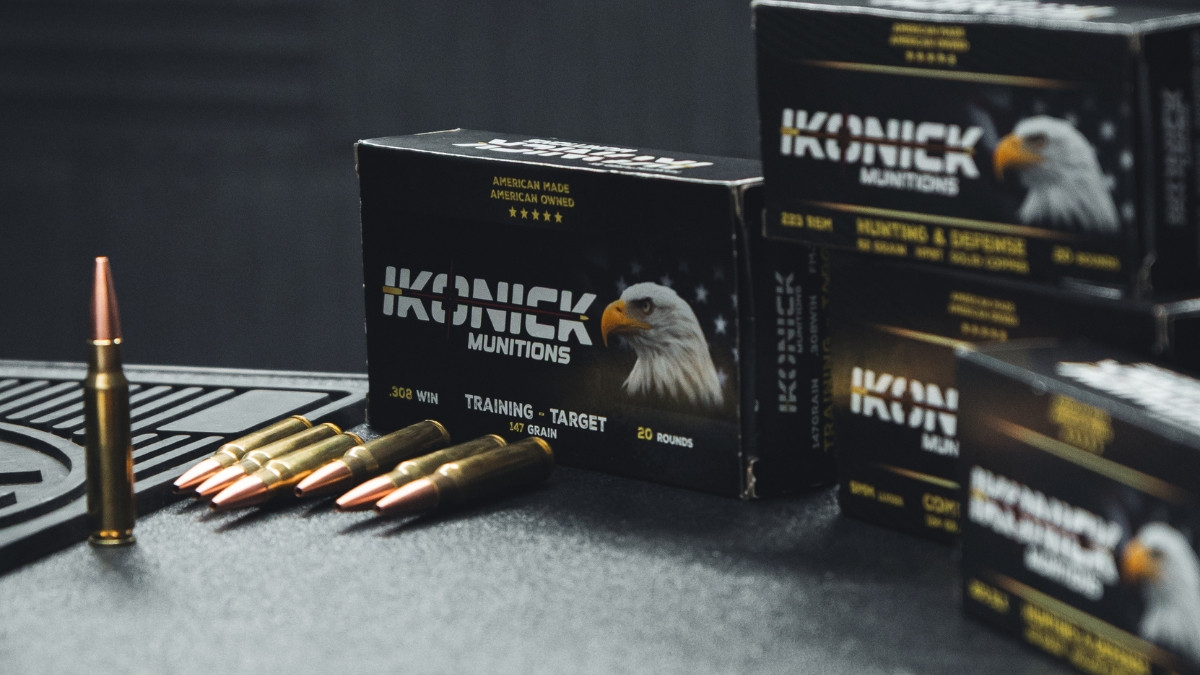
IKONICK USA offers premium FMJ training ammunition and defensive loads across popular calibers. Built in the USA with consistent quality from your first box to your hundredth.
Shop Ammunition