
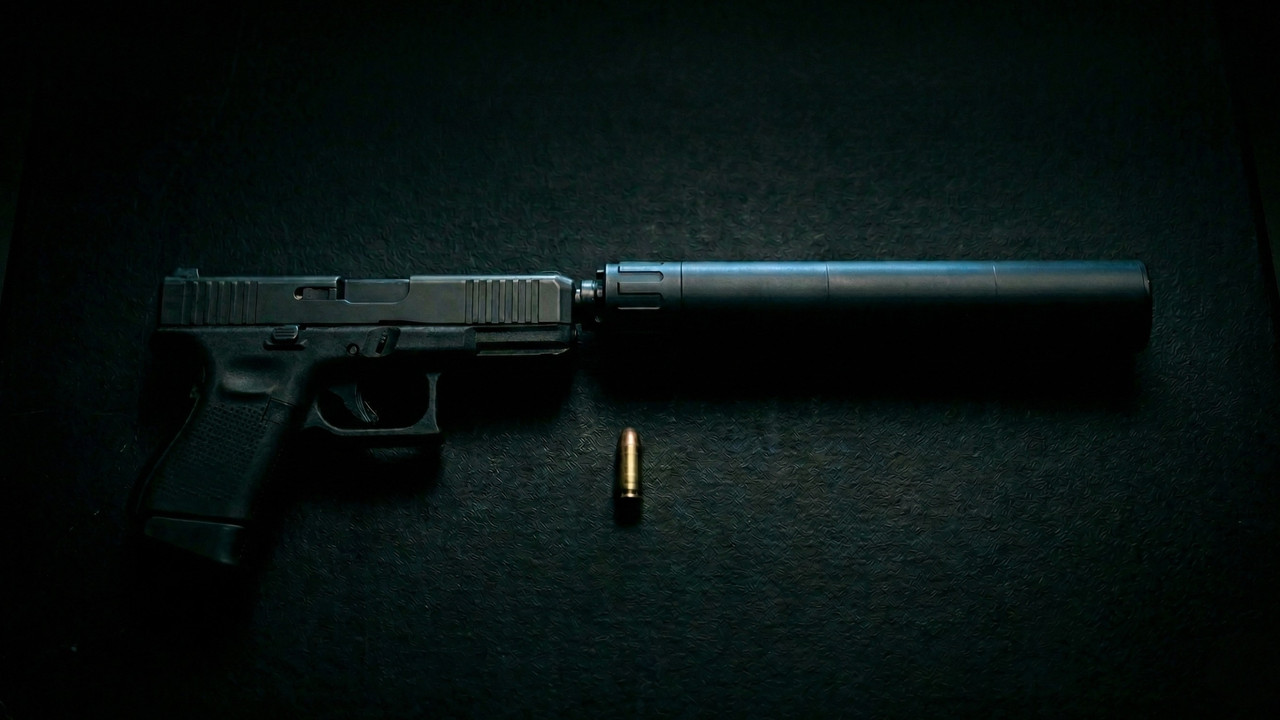
Subsonic vs. Supersonic: What Actually Matters for Suppressed Shooting
Apr 22nd 2026
Subsonic vs. Supersonic: What Actually Matters for Suppressed Shooting
Quick Answer
For suppressed shooting, subsonic ammunition (such as 147gr 9mm or heavy 200 to 220gr 300 Blackout) is the only way to remove the bullet's sonic crack, which is what makes a suppressed gun genuinely quiet and often hearing-safe. Supersonic ammunition still produces a downrange crack that no suppressor can silence, but it cycles more reliably, shoots flatter, and defeats barriers better. Choose subsonic when maximum quiet or close-range precision is the goal; choose supersonic for versatility, range, and reliable cycling.
Here's what really happens when you add a suppressor, and why the subsonic-vs-supersonic decision is more complicated than the internet makes it sound.
The Two Sound Sources
When you fire a gun, you're hearing two distinct sounds:
Muzzle blast: The expanding gases escaping from the barrel. This is what a suppressor reduces; it captures those gases and releases them gradually instead of all at once. A quality suppressor can reduce muzzle blast by 25–35 decibels.
Sonic crack: The shockwave created when a bullet travels faster than sound (approximately 1,125 fps at sea level). This happens downrange, not at the muzzle, and there's nothing a suppressor can do about it.
With supersonic ammunition, you've got both sounds. The suppressor handles the muzzle blast, but the sonic crack continues downrange as long as the bullet stays supersonic.
With subsonic ammunition, you've only got muzzle blast, and the suppressor can reduce that dramatically.
The result: Subsonic suppressed shooting is genuinely quiet. Supersonic suppressed shooting is significantly quieter than unsuppressed, but not Hollywood-movie quiet.
The Velocity Threshold and Why It's Not Universal
The sound barrier isn't a fixed number. It changes based on temperature, altitude, and humidity.
Speed of Sound by Conditions
At sea level, 59°F: approximately 1,116 fps
At sea level, 90°F: approximately 1,135 fps
At 5,000 feet elevation: approximately 1,085 fps
This means ammunition loaded to 1,100 fps might be subsonic in cold weather at altitude, but supersonic on a hot day at sea level.
Practical impact: If you're loading ammunition right at the subsonic threshold, environmental conditions will determine whether you get a sonic crack or not. Most manufacturers load subsonic ammunition to 1,050–1,075 fps to maintain a buffer below the sound barrier across different conditions.
Cycling Reliability: The Real Tradeoff
Here's the problem with subsonic ammunition: guns are designed to run on a specific recoil impulse. When you reduce bullet velocity significantly, you're changing the forces acting on the action.
Pistols: Most modern pistols will cycle subsonic ammunition without issues, particularly 147gr 9mm or 230gr .45 ACP. But lightweight polymer frames and reduced-power recoil springs (common in carry guns) sometimes struggle with heavy, slow-moving bullets. The slide doesn't get enough rearward momentum to fully cycle.
Rifles: Direct impingement AR-15s are particularly sensitive to this. They're timed around a specific gas pressure arriving at a specific moment. Subsonic ammunition produces lower port pressure, which can lead to short-stroking and failures to eject.
The fix: Some guns need aftermarket components (heavier buffers, adjustable gas blocks) to run subsonic ammunition reliably. This isn't a defect; it's physics. The gun was designed around one pressure curve, and you're feeding it another.
The 300 Blackout Solution
300 AAC Blackout exists specifically to solve the subsonic/supersonic problem in AR platforms.
The cartridge was designed to cycle reliably in a standard AR-15 with both supersonic (110–125gr) and subsonic (200–220gr) loads. The heavy subsonic bullets generate enough recoil impulse to cycle the action despite their low velocity.
Why this matters: In 5.56 NATO, going subsonic means using bullets so heavy (75–77gr) that they're barely stabilized in standard twist rates. In 300 BLK, the 200–220gr subsonic loads are purpose-built for that application.
If you're building a suppressed rifle and want the option to run both supersonic and subsonic effectively, 300 Blackout is the engineering solution. 5.56 can do it, but with compromises.
The Suppressor Wear Consideration
Supersonic ammunition creates higher peak pressure and gas volume at the muzzle. Over time, this accelerates suppressor wear, particularly on the baffles closest to the muzzle.
Practical Service Life
Quality suppressors are rated for tens of thousands of rounds
Supersonic ammunition might reduce that to 20,000–30,000 rounds
Subsonic ammunition can extend service life to 40,000+ rounds
This isn't a reason to avoid supersonic ammunition in a suppressor; it's a reason to understand that suppressors are wear items, not lifetime purchases. If you're shooting tens of thousands of rounds annually, supersonic ammunition will cost you a suppressor replacement sooner.
The Accuracy Question
Subsonic ammunition generally produces tighter groups than supersonic ammunition at shorter distances (0–100 yards). Why?
Transonic instability. As a supersonic bullet slows down through the sound barrier (usually around 600–800 yards for most rifle cartridges), it experiences turbulence that opens up groups. Subsonic bullets never enter this instability zone.
Reduced barrel whip. Slower-moving bullets spend more time in the barrel, which means the barrel has more time to settle into its natural harmonic node. This is why many precision shooters prefer heavy, slow bullets.
Lower recoil impulse. The reduced muzzle blast and gentler recoil of subsonic ammunition makes it easier to shoot tight groups, particularly in rapid fire.
The tradeoff: You're giving up significant velocity, which means more drop and wind drift at distance. Subsonic .308 Winchester drops like a mortar past 200 yards.
Practical Sound Comparison
Let's put numbers on this, because "quiet" is subjective:
Decibel Levels
Unsuppressed 5.56: ~165 dB
Suppressed 5.56 (supersonic): ~130–135 dB
Suppressed 300 BLK (subsonic): ~115–120 dB
For Reference
140 dB: Instant hearing damage
130 dB: Loud rock concert
120 dB: Chainsaw
110 dB: Shouting
The reality: Suppressed supersonic shooting still requires hearing protection. Suppressed subsonic shooting is hearing-safe for most shooters (though not all; sensitivity varies).
If your goal is to shoot without ear pro, you need subsonic. If your goal is just to reduce noise and protect hearing, supersonic suppressed gets you most of the way there.
Terminal Performance and Barrier Penetration
Subsonic bullets hit targets with significantly less energy than their supersonic counterparts.
Energy Comparison
115gr 9mm at 1,150 fps: 338 ft-lbs of energy
147gr 9mm at 1,000 fps: 326 ft-lbs of energy
Similar energy despite the velocity difference. But when you drop to true subsonic velocities (950–1,000 fps), you're losing 20–30% of your energy compared to full-power loads.
For defensive use: Subsonic hollow points need to be specifically designed to expand at lower velocities. Not all defensive ammunition performs reliably under 1,000 fps.
For barrier penetration: Lower velocity means reduced ability to defeat barriers like automotive glass, drywall, or heavy clothing. If you're using subsonic ammunition defensively, you need to test it through relevant barriers.
When to Choose Subsonic
Subsonic ammunition makes sense when:
- Suppressor use is primary. If the gun is dedicated to suppressed shooting and you want maximum sound reduction, subsonic is the way.
- Short-range precision work. For close-range applications where drop and drift don't matter, subsonic eliminates one source of accuracy variability.
- Indoor shooting. If you're shooting in an enclosed space (training facility, indoor range), subsonic reduces overpressure and makes the environment more comfortable.
- Barrier defeat isn't required. If your defensive scenario doesn't involve shooting through barriers, subsonic defensive loads can work fine.
When to Choose Supersonic
Supersonic ammunition makes sense when:
- The gun isn't always suppressed. If you're running the gun both suppressed and unsuppressed, supersonic ammunition cycles reliably in both configurations.
- Distance shooting. Past 100–150 yards, subsonic ammunition's drop becomes prohibitive. Supersonic maintains flatter trajectories.
- Barrier penetration matters. For duty or defensive use where you might need to defeat glass or light cover, supersonic ammunition maintains effectiveness better.
- You want maximum versatility. One load that works suppressed and unsuppressed means less complexity in your ammunition logistics.
The Practical Middle Ground
For most shooters running suppressors on semi-auto platforms, the answer isn't either/or; it's both.
Keep supersonic ammunition as your primary. It works reliably, maintains better external ballistics, and doesn't require gun modifications.
Keep subsonic ammunition for specific applications. When maximum sound reduction matters or when you're doing close-range precision work, subsonic shines.
The suppressor still provides significant sound reduction with supersonic ammunition. You're not "wasting" the suppressor by running supersonic loads; you're just accepting a different sound profile than what subsonic provides.
The Bottom Line
The subsonic vs. supersonic decision isn't about which is "better." It's about matching your ammunition to your specific application.
Subsonic ammunition is quieter, easier on suppressors, and often more accurate at close range. But it requires gun modifications in some platforms, limits your effective range, and reduces terminal performance.
Supersonic ammunition maintains ballistics, cycles reliably, and penetrates barriers better. But it produces a sonic crack that defeats total sound suppression.
If you're shooting indoors, close-range, or in situations where total sound suppression matters, subsonic is worth the tradeoffs. If you need versatility, range capability, or barrier performance, supersonic with a suppressor still delivers significant sound reduction without the compromises.
Your suppressor isn't picky; it'll reduce sound with either type of ammunition. The question is: what are you optimizing for?
Choose based on your actual use case, not based on what sounds cool on the internet.
Frequently Asked Questions
Is 147 grain 9mm subsonic?
Yes. Most 147 grain 9mm loads travel around 950 to 1,000 fps, which stays below the roughly 1,125 fps speed of sound at sea level. That is why 147gr is the standard choice for suppressed 9mm shooting. Lighter 115gr and 124gr loads are usually supersonic.
Why is subsonic ammo quieter?
A suppressor reduces the muzzle blast, but it cannot stop the sonic crack a bullet makes when it flies faster than sound. Subsonic ammo never breaks the sound barrier, so there is no crack to silence. That is what makes subsonic suppressed fire genuinely quiet, and often hearing-safe.
Is subsonic 9mm good for suppressors?
Yes. Our 147gr 9mm FMJ Subsonic load is one of the best pairings for a suppressor. It delivers maximum sound reduction, and because it runs at lower pressure it is gentler on your suppressor's baffles, which can extend service life.
Does subsonic 9mm cycle reliably?
In most modern pistols, yes, especially with 147gr loads. Some lightweight carry guns with reduced-power recoil springs can struggle with slow, heavy bullets. In AR-platform pistols and carbines you may need a heavier buffer or an adjustable gas block to run subsonic reliably.
What is the difference between subsonic and supersonic ammo?
Supersonic ammo travels faster than the speed of sound, about 1,125 fps, and creates a sonic crack downrange. Subsonic ammo stays below that speed, so it produces no crack. Supersonic shoots flatter and hits harder at distance, while subsonic is quieter and often more accurate at close range.
Quiet Performance, Consistent Results
IKONICK USA ammunition is loaded to tight velocity tolerances, giving you predictable performance whether you're running suppressed or unsuppressed.
Shop Ammunition