
Red Dots on Pistols: How Ammo Consistency Affects Zero
Apr 13th 2026
Red Dots on Pistols: How Ammo Consistency Affects Zero
Here's why ammunition consistency matters more with optics, and what to do about it.
The Iron Sight Compensation Effect
With iron sights, you're unconsciously compensating for small variations in your sight picture every time you press the trigger. Your front sight might be slightly left or right of center. You might have a bit more or less light on either side of the post. Your eye refocuses slightly between the rear sight, front sight, and target.
All of these micro-adjustments mask ammunition inconsistencies. If a round has slightly higher velocity and impacts 2 inches high, you don't notice because your sight alignment varied by 2 inches anyway.
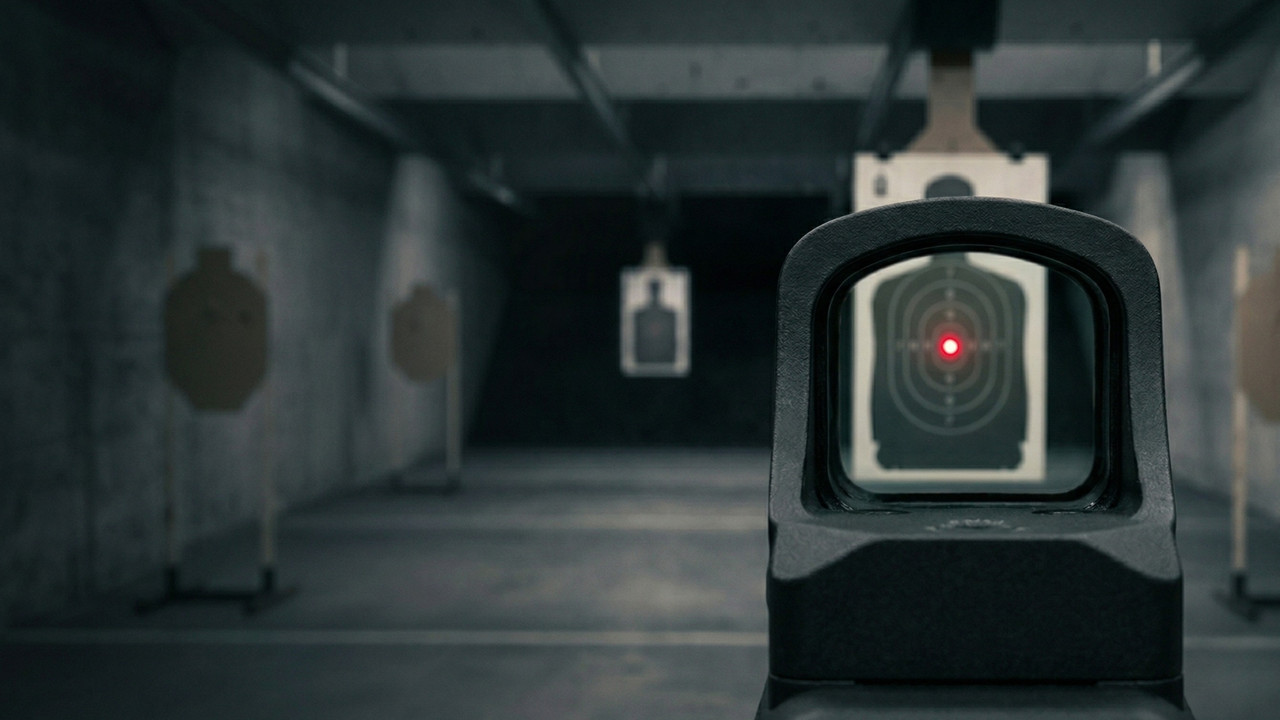
Red dots eliminate most of that compensation. The dot is the dot — there's no sight alignment, only sight picture. This means when a round impacts away from your point of aim, you notice it immediately.
What you're seeing isn't the optic failing. It's the optic revealing how inconsistent your ammunition actually is.
Velocity Variations and Point of Impact
Here's the physics: when a bullet leaves your barrel at a different velocity, it follows a slightly different trajectory.
With rifle ammunition at rifle distances, this is obvious — velocity changes of 50 fps can shift point of impact several inches at 300 yards. But it happens with pistol ammunition too, just on a smaller scale.
The Numbers in Practice
A 115gr 9mm round at 1,150 fps will impact about 1.5 inches higher at 25 yards than the same bullet at 1,100 fps. With iron sights, that's within your wobble zone. With a red dot held perfectly stable, that's a visible shift.
Quality ammunition keeps extreme spread (the gap between your fastest and slowest rounds) under 30 fps. Budget ammunition might show spreads of 80–100 fps or more.
That velocity inconsistency translates directly into vertical dispersion on your target, and your red dot makes it impossible to ignore.
The Zero Shift Nobody Expected
Here's where it gets frustrating: you zero your gun with Brand A ammunition. A month later, you show up with Brand B, and your zero has shifted 3 inches left and 2 inches low.
This isn't your optic coming loose (though you should check). It's ammunition-induced zero shift, and it's more common than most shooters realize.
Why it happens:
Pressure differences. Different manufacturers load to different pressure specs. Higher pressure means faster slide velocity and different recoil dynamics, which changes how the gun settles before the bullet exits.
Bullet weight affects barrel time — how long the bullet spends in the barrel. A 124gr bullet stays in the barrel slightly longer than a 115gr bullet, which means the gun has more time to move under recoil before the bullet leaves. This shifts your point of impact.
Bullet shape changes how the round feeds and how consistently it engages the rifling. Inconsistent engagement means inconsistent spin stabilization, which shows up as horizontal dispersion.
With iron sights, you probably never noticed any of this. With a red dot, it's glaringly obvious.
Optic Height and Mechanical Offset
When you add a red dot, you're also adding mechanical offset — the physical distance between your bore axis and your optic.
With iron sights, this offset is typically around 0.75 inches. With most pistol red dots, it's closer to 1.25–1.5 inches depending on mounting height.
This matters because your bullet crosses your line of sight twice: once close (around 10 yards) and once far (around 50 yards for most pistol cartridges). Between those points, the bullet is traveling on an arc relative to your straight line of sight.
Small velocity variations change where those crossing points occur. With iron sights, the lower offset meant these shifts were minimal. With red dots, the increased offset magnifies the effect.
Practical impact: If your ammo velocity varies by 50 fps, your zero might shift by 1–2 inches at 15 yards. Again, iron sights masked this. Red dots reveal it.
The 25-Yard Zero Illusion
Most shooters zero their pistol red dots at 25 yards. It's a standard distance, it's where most ranges have targets, and it seems reasonable.
But here's the problem: at 25 yards, small ammunition inconsistencies get magnified just enough to be visible, but not enough to clearly diagnose.
You zero with one brand. Two weeks later with different ammo, you're 3 inches low. You adjust your optic. Next month with another brand, you're 2 inches high. You adjust again.
What you're chasing isn't a zero — you're chasing ammunition variability.
Better Approach
Zero at 10 yards with your primary carry or duty ammunition. Then confirm that zero holds at 15, 25, and 35 yards with the same ammunition. If it doesn't, you've found an ammunition consistency problem, not an optic problem.
The Consistency Test You Should Run
If you're serious about running a red dot, here's the diagnostic that separates ammunition quality from optic issues:
The Ammo vs. Optic Diagnostic
Step 1: Zero your gun at 10 yards with ammunition from Manufacturer A.
Step 2: Fire a 10-round group at 25 yards. Measure group size and note POI.
Step 3: Without adjusting the optic, switch to ammunition from Manufacturer B.
Step 4: Fire another 10-round group at 25 yards.
If both groups are the same size and centered at the same point, your ammunition is consistent and your zero is stable. If the groups shift 2+ inches in any direction, you're seeing ammunition-induced zero shift.
This isn't a gun problem. It's not an optic problem. It's an ammunition consistency problem.
Red Dots and Defensive Shooting
If you're carrying a red-dot-equipped pistol for defensive purposes, ammunition consistency becomes more than academic.
Most defensive encounters happen at 3–7 yards. At that distance, even wildly inconsistent ammunition will hit center mass. You're fine.
But what about a 15-yard shot through a narrow window of opportunity? Or a 25-yard shot in an active threat situation?
The difference between ammunition that holds a 3-inch group and ammunition that sprays a 7-inch group could be the difference between stopping a threat and creating a liability.
With iron sights, you probably never tested your defensive ammo past 7 yards. With a red dot, you can — and should. The optic will tell you whether your expensive defensive rounds actually perform better than cheap ball ammo, or whether you're paying for marketing.
The Training Ammunition Dilemma
Here's the hard question: should you train with the same ammunition you carry, or can you train with budget ammo and carry premium ammo?
With iron sights, the conventional wisdom was "train with what you carry, but practice ammo is fine for most work." With red dots, that answer shifts.
If your carry ammunition hits 2 inches different from your practice ammunition, every rep you're building with cheap ammo is building a slightly wrong sight picture. Your brain is learning to expect the dot to be in one place when the hit occurs, but your carry ammo produces hits in a different place.
This isn't catastrophic for close-range defensive shooting. But it's friction — a variable you don't need.
The Compromise
Use quality practice ammunition that's loaded to similar specs as your carry ammo. You don't need to burn through $1.50/round defensive hollow points for every training session. But you do need practice ammo that produces similar velocities and POI to your carry ammunition.
When to Suspect the Optic vs. the Ammunition
Not every accuracy problem is ammunition-related. Here's how to diagnose:
It's probably the ammunition if:
- Your groups shift with different brands but stay tight
- Velocity readings show high extreme spread (50+ fps)
- The same ammunition produces consistent groups, just in a different location than your other ammunition
It's probably the optic if:
- Groups are consistently larger than your iron sight groups
- POI shifts within the same box of ammunition
- The dot appears to "float" or isn't crisp
It's probably the mounting if:
- POI shifts dramatically after holstering/drawing
- You can see or feel movement in the optic when you press on it
- Zero shifts after recoil
Most of the time, when shooters blame their optic, they're actually seeing ammunition inconsistency. But it's worth eliminating the other variables before throwing money at the ammunition problem.
The Bottom Line
Red dots are precision instruments. They'll show you exactly where your gun is pointed when the round breaks. But they'll also show you every inconsistency in your ammunition that iron sights hid.
Velocity variations create vertical dispersion. Bullet weight variations create timing changes that shift POI. Pressure variations create recoil dynamic changes that affect how the gun settles.
None of this is new — it was always happening. You just couldn't see it with iron sights.
If you're running a red dot seriously — for competition, carry, or duty — ammunition consistency isn't a luxury feature. It's the foundation of a stable zero and predictable performance.
You don't need match-grade ammo for every practice session. But you do need ammunition consistent enough that your zero holds across different boxes and lot numbers.
Your red dot will tell you the truth about your ammunition. The question is whether you're ready to listen.
Hold Your Zero
IKONICK USA ammunition is loaded to tight velocity tolerances with consistent components — so your red dot zero stays where you set it, box after box.
Shop Ammunition