
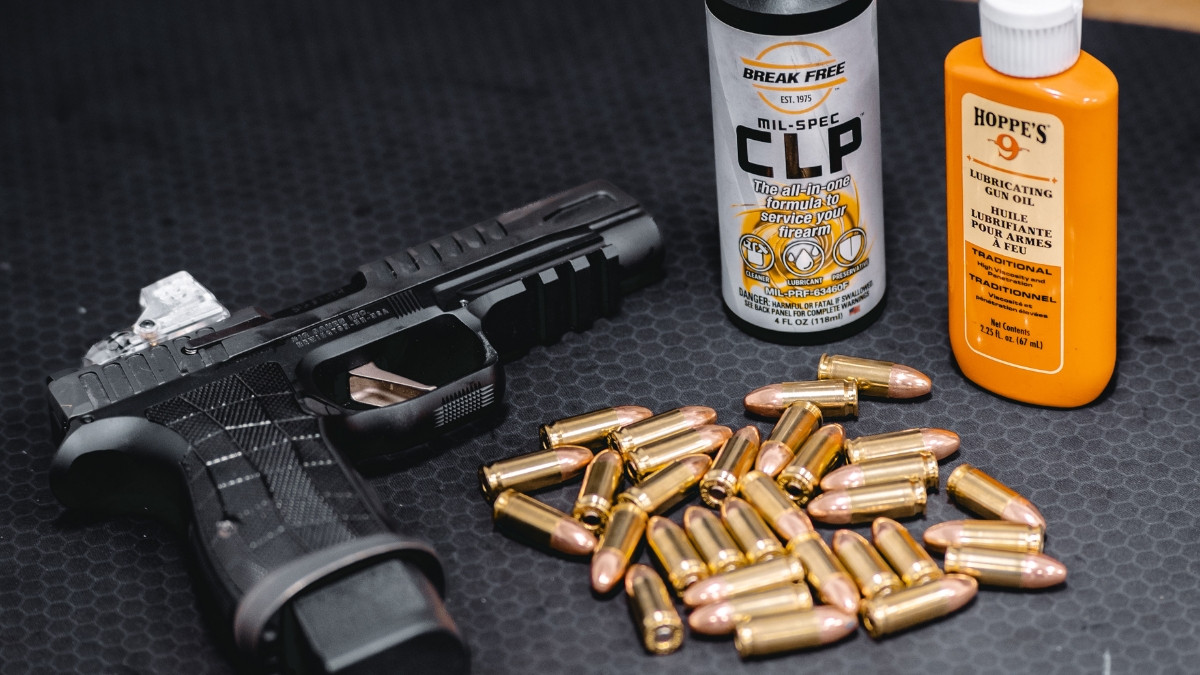
Lubrication and Ammunition: How Oil Affects Cycling
Jun 18th 2026
Lubrication and Ammunition: How Oil Affects Cycling
What Lubrication Does in a Firearm
Lubrication reduces metal-on-metal friction between moving parts. In a semi-automatic firearm, the critical friction points include the slide rails, barrel hood and locking surfaces, barrel link or cam, and the trigger mechanism.
When these surfaces are properly lubricated, the slide moves freely, the barrel tilts and locks consistently, and the action cycles at the speed it was designed for. When they're not, friction slows everything down, changes the timing, and creates reliability issues that look exactly like ammunition problems.
The Over-Lubrication Problem
Running your gun too wet creates its own set of issues, and they're not the ones most people expect.
Oil migration into the chamber. Excess oil on the slide and barrel can work its way into the chamber. When a round is chambered, that oil coats the brass case. During firing, the oil reduces the friction between the case and the chamber wall, which changes how the case expands and seals. In extreme cases, this can cause the case to slam rearward against the bolt face before the brass has time to grip the chamber walls, increasing pressure on the bolt and extractor.
Oil contamination of ammunition. Oil that contacts primers can degrade the primer compound over time, leading to delayed ignition or misfires. This is most common with ammunition stored in an over-lubricated gun for extended periods, like your carry ammunition that sits chambered for weeks or months.
Debris attraction. Excess oil attracts dust, carbon, and unburned powder. This creates a paste that builds up on the slide rails and in the action, gradually increasing friction rather than reducing it. After enough rounds, your over-lubricated gun actually has more friction than a properly lubricated one.
The Under-Lubrication Problem
Running your gun dry creates more obvious and immediate problems.
Increased slide friction. Without lubrication, the slide drags against the frame rails. This slows the entire cycling process. The slide doesn't travel rearward as far or as fast, which can cause failures to eject (the extractor doesn't pull the spent case free with enough force) and failures to feed (the slide doesn't strip the next round from the magazine with enough momentum).
Heat buildup. Metal-on-metal contact without lubrication generates heat through friction. During extended shooting sessions, this heat compounds the problem: metal parts expand slightly, tolerances tighten, and the gun gets progressively less reliable as you shoot.
Accelerated wear. Every cycle without proper lubrication grinds metal against metal. The slide rails, barrel hood, and locking lugs all wear faster. This doesn't just affect today's range session; it permanently changes the dimensions of your firearm's bearing surfaces.
The Lubrication Burn-Off Effect
Here's something most shooters don't account for: lubrication burns off during shooting.
The heat generated by firing, combined with the friction of cycling, evaporates or displaces oil from the contact surfaces. A gun that's properly lubricated at round one might be functionally dry by round 150.
Why This Matters for Reliability Testing
If you're running a 200-round reliability test on your carry gun, the gun's lubrication state changes throughout the test. Rounds 1 through 50 are running on fresh oil. Rounds 150 through 200 are running on significantly less. If you experience malfunctions late in the test, it might not be the ammunition at all. It might be the gun running dry.
This is why reliability tests should be done in one continuous session without re-lubricating. You need to see how the gun performs as conditions degrade, not just when everything is freshly oiled.
Where to Lubricate
Less is more, but placement matters more than quantity.
Slide rails: A thin film on both rails. This is the primary friction surface in most semi-automatics. One drop per rail, spread with your finger or a cloth.
Barrel hood and locking lugs: A light coating where the barrel contacts the slide. This is where the barrel locks into battery and where it tilts during cycling.
Barrel exterior: A thin coating where the barrel contacts the slide interior during cycling. Not the bore itself.
Where NOT to Lubricate
The chamber. Oil in the chamber changes how brass cases seal and extract. Keep the chamber clean and dry.
The bore. A light protective coating during storage is fine, but you should run a dry patch through the bore before shooting. Oil in the bore can cause pressure spikes on the first round.
The magazine. Oil on magazine components attracts debris that can cause feeding issues. Magazines should be kept clean and dry.
Ammunition. Never oil your ammunition. Oil on primers degrades ignition reliability. Oil on cases changes extraction dynamics.
Oil Type Matters Less Than You Think
The firearms industry sells dozens of specialized lubricants, each claiming superior performance. In practice, the differences between quality gun oils are minimal compared to the difference between proper application and improper application.
What matters: the lubricant stays in place under heat and doesn't evaporate immediately. What matters less: the specific brand, viscosity, or proprietary additive package.
Avoid using WD-40 as a lubricant (it's a solvent and water displacer, not a lubricant), motor oil (too thick and attracts excessive debris), and cooking oils (they polymerize under heat and create a varnish). Beyond those, most gun-specific lubricants will do the job if applied correctly.
Temperature and Lubrication
If you shoot in varying temperatures, your lubricant's behavior changes.
Cold weather: Oil thickens. Slide friction increases. The gun may feel sluggish during the first few rounds until heat builds up and thins the oil. In extreme cold, some oils become thick enough to cause cycling failures.
Hot weather: Oil thins and migrates. It runs off contact surfaces faster, which means you might need to re-lubricate during longer shooting sessions. It also migrates into areas you don't want it (like the chamber) more readily.
If you shoot in extreme temperatures regularly, a lubricant designed for those conditions is worth the investment. For most shooters in moderate climates, standard gun oil works fine year-round.
The Diagnostic Approach
When you experience a malfunction, lubrication should be one of your first diagnostic checks before blaming the ammunition.
- Failure to extract: Could be a dry chamber or dry slide rails. The extractor needs the slide to move with enough velocity to snap the case free.
- Failure to feed: Could be a dry or sluggish slide that doesn't have enough momentum to strip a round from the magazine.
- Failure to go into battery: Could be friction on the barrel hood or locking surfaces preventing the barrel from fully seating.
- Stovepipe: Often caused by a slide that's moving too slowly to eject the spent case clear of the ejection port. Lubrication (or lack of it) is a common culprit.
Before you switch ammunition brands, check your lubrication. A clean, properly oiled gun eliminates one of the most common variables in cycling reliability.
The Bottom Line
Your firearm's cycling system is designed around specific friction tolerances. Too much oil changes those tolerances in one direction. Too little changes them in the other. Both create malfunctions that get blamed on ammunition when the real issue is lubrication.
The goal is a thin, consistent film on the right surfaces and nothing on the wrong ones. Apply less than you think you need, in the right places, and re-evaluate during extended shooting sessions when burn-off changes the equation.
When your gun runs right, your ammunition has the best chance of performing the way it was designed to.
Oil your gun correctly. Then trust your ammo.
Consistent Ammo for a Well-Maintained Gun
IKONICK USA ammunition is loaded to reliable pressure specs and manufactured with clean-burning powder, so your properly maintained firearm stays cleaner longer between sessions.
Shop Ammunition