
Grain Weight and Barrel Length: Finding Your Optimal Match
Apr 22nd 2026
Grain Weight and Barrel Length: Finding Your Optimal Match
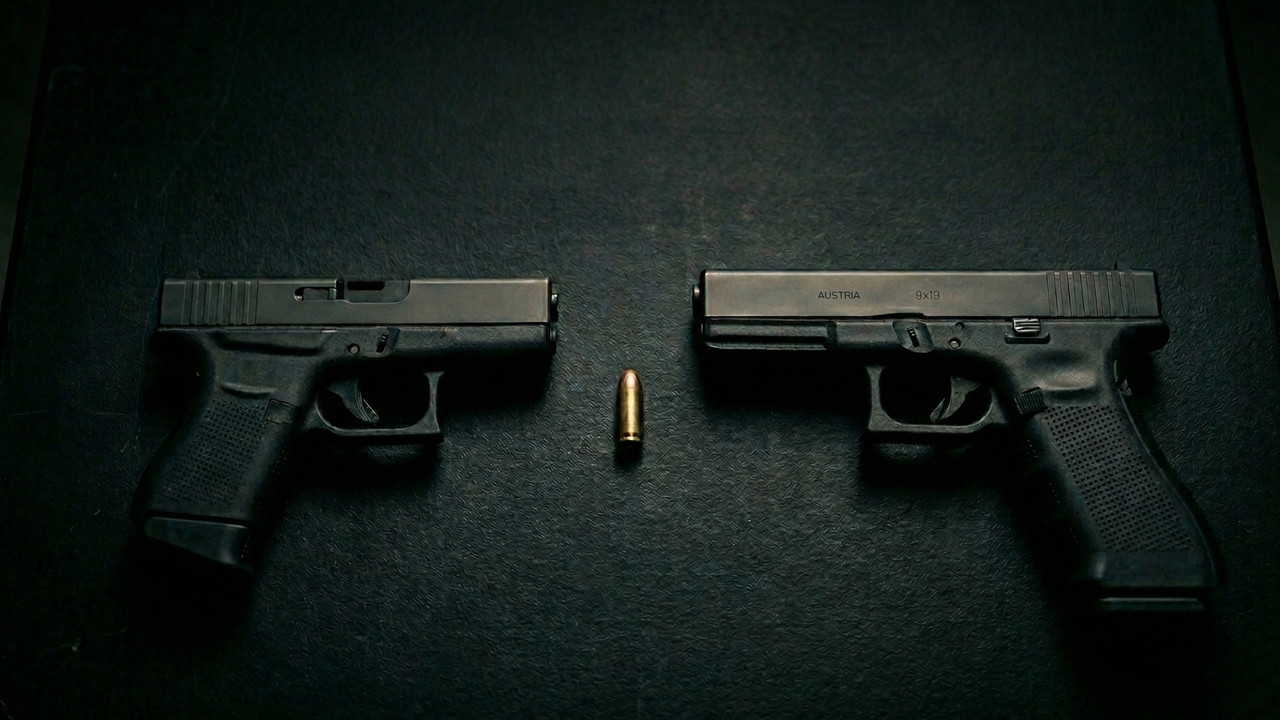
Here's why a 124gr bullet shines in compact pistols while a 115gr might be better in a full-size, and how barrel length changes everything about how ammunition performs.
The Barrel Length and Pressure Relationship
When you pull the trigger, gunpowder ignites and creates expanding gases. Those gases push the bullet down the barrel while simultaneously building pressure behind it.
In a longer barrel, the bullet has more time to accelerate before it exits. The gases have more distance to expand and push. The result: higher muzzle velocity from the same cartridge.
The Velocity Gap Is Real
A 115gr 9mm round might leave a 5-inch barrel at 1,200 fps, but only achieve 1,050 fps from a 3-inch barrel. That's a 150 fps difference, enough to significantly change terminal performance, felt recoil, and even reliability.
But here's where it gets interesting: heavier bullets accelerate differently than lighter bullets in the same barrel length. The pressure curve changes. The barrel time changes. And sometimes, a heavier bullet actually performs better in a shorter barrel.
Why 124gr Dominates in Compact 9mms
If you're carrying a compact or subcompact 9mm (3–3.5 inch barrel), 124gr ammunition often outperforms 115gr, despite being heavier. Here's why:
Barrel time optimization. A 124gr bullet spends slightly more time in the barrel than a 115gr bullet. In a longer barrel, that extra time doesn't matter much; both bullets reach full velocity. But in a short barrel, that extra dwell time allows the 124gr bullet to capture more of the expanding gases' energy before exiting.
Pressure curve matching. Powder manufacturers tune their loads to specific bullet weights. The 124gr loads designed for defensive use often use slightly slower-burning powder that reaches peak pressure later, right when a short barrel needs it. The 115gr loads might hit peak pressure too early, wasting energy as muzzle blast instead of bullet velocity.
Momentum retention. Even if a 124gr bullet exits a 3-inch barrel at slightly lower velocity than a 115gr bullet, the heavier projectile carries more momentum. This translates to better barrier penetration and more consistent terminal performance.
Practical result: In a compact 9mm, a quality 124gr defensive load often produces 50–100 fps more velocity than you'd calculate from a simple comparison, because the load is optimized for shorter barrels.
The Full-Size Advantage
Flip the scenario: you're shooting a full-size pistol with a 4.5–5 inch barrel. Now the dynamics change.
Complete powder burn. With more barrel length, even fast-burning powder has time to completely combust. The 115gr bullet's lighter weight means it accelerates faster, taking full advantage of the longer barrel.
Reduced pressure stress. In a longer barrel, peak pressure occurs earlier in the barrel (relative to bullet position), which means the brass has more time to contract before extraction. This is why longer-barreled guns sometimes handle +P ammunition with less felt recoil than compact guns; the pressure peak happens in a different place.
Velocity maximization. If your goal is maximum velocity (for competition or specific applications), lighter bullets in longer barrels will almost always win. A 115gr bullet from a 5-inch barrel might reach 1,250 fps, while a 147gr subsonic deliberately stays under 1,000 fps regardless of barrel length.
The tradeoff: You're giving up some momentum for velocity. For competition or range use, that's often the right choice. For defensive use, it depends on your priority; barrier penetration favors heavier bullets, while expansion reliability favors lighter, faster ones.
The Subsonic Exception: 147gr in Any Barrel
Subsonic 147gr 9mm ammunition plays by different rules because it's intentionally loaded to stay under the speed of sound (approximately 1,125 fps at sea level).
Why subsonic matters:
- Suppressor use: supersonic cracks defeat the purpose of a suppressor
- Cycling reliability: some pistols with aftermarket parts need heavier bullets to cycle reliably
- Reduced felt recoil: the slower-moving slide produces a different recoil impulse that some shooters prefer
The barrel length consideration: A 147gr subsonic load will perform similarly in a 3-inch barrel and a 5-inch barrel because it's not trying to maximize velocity; it's trying to stay just under the sound barrier while maintaining reliable cycling.
This makes 147gr subsonic one of the few "universal" loads that works reasonably well across different barrel lengths, though you'll still see velocity variations that affect point of impact.
Rifle Cartridges: Where Barrel Length Really Shows Up
The relationship between bullet weight, barrel length, and powder burn gets even more dramatic in rifle cartridges.
5.56 NATO / .223 Remington: A 55gr bullet is optimized for 20-inch barrels. It reaches maximum velocity and full fragmentation reliability at those lengths. In a 10.5-inch barrel, that same bullet might not reach the velocity threshold needed for reliable fragmentation, and you're leaving 200+ fps on the table. Meanwhile, a 77gr bullet with slower-burning powder actually performs relatively better in shorter barrels because it's designed to use the available barrel length more efficiently.
300 Blackout: This cartridge was specifically designed around the barrel length problem. Supersonic 110–125gr loads work well in any barrel length from 8–16 inches. Subsonic 200–220gr loads are optimized for short barrels with suppressors.
.308 Winchester: Standard 147–168gr loads shine in 20–24 inch barrels. Drop down to a 16-inch barrel and you're losing 100–150 fps. Move up to heavier 175–180gr loads designed for slower burn rates, and you lose less velocity in the shorter barrel.
The pattern: heavier bullets with slower-burning powder lose less velocity in shorter barrels than lighter bullets with faster-burning powder.
The Practical Testing Protocol
Here's how to find your optimal grain weight for your specific gun:
Four-Step Optimization Test
Step 1: Chronograph three different bullet weights (115gr, 124gr, 147gr for 9mm) through your specific barrel length. Not manufacturer's claims; your actual gun.
Step 2: Calculate kinetic energy for each: (bullet weight in grains × velocity²) ÷ 450,240
Step 3: Shoot groups at 15 and 25 yards with each load. Measure group size and note point of impact.
Step 4: Test cycling reliability with each load. Some guns are picky about bullet weight, particularly when you get into very light or very heavy extremes.
The winner is the bullet weight that gives you the best combination of adequate velocity for your intended purpose, acceptable accuracy from your gun, reliable cycling, and manageable felt recoil.
This isn't academic. The "best" ammunition for your buddy's 5-inch gun might be entirely wrong for your 3.5-inch gun, even if they're the same model.
The Recoil Consideration
Heavier bullets at lower velocities often produce softer-feeling recoil because the slide velocity is slower. But they're transferring the same energy; it just feels different.
Lighter bullets at higher velocities produce snappier recoil with faster muzzle rise. The total energy might be similar, but the impulse timing changes.
For competition: Lighter, faster bullets often allow quicker recovery between shots because muzzle rise is more vertical and less "rolling."
For defensive use: Heavier bullets often feel more controllable, but this is highly individual. Some shooters drive 115gr faster than 147gr despite the recoil difference.
For training: Whatever weight you carry should be what you train with, or at least something close in recoil impulse. Training with 115gr and carrying 147gr means your recoil management is built around the wrong timing.
The Barrel Length Sweet Spots
Based on common cartridges and typical loads:
9mm
3–3.5" barrels: 124gr optimized for short barrels
4–4.5" barrels: 115gr or 124gr, either works well
5"+ barrels: 115gr maximizes velocity
5.56 / .223
10.5–11.5" barrels: 62–77gr
14.5–16" barrels: 55–62gr
20" barrels: 55gr achieves full velocity potential
.308
16" barrels: 168–175gr
18–20" barrels: 147–168gr
22–24" barrels: 147gr maximizes velocity
These aren't absolute rules; they're starting points based on how ammunition is commonly loaded. Your specific gun might prefer something different.
The Bottom Line
Bullet weight and barrel length interact in ways most shooters never consider. The ammunition that performs optimally in your friend's gun might be completely wrong for yours, even if you're shooting the same cartridge.
Short barrels don't just produce lower velocity; they change which bullet weights perform best. The relationship between powder burn rate, barrel time, and bullet mass means that sometimes a heavier bullet actually outperforms a lighter one in a shorter barrel.
You don't need to become a ballistics engineer. But understanding that your 3-inch carry gun has different optimal ammunition than a 5-inch range gun will point you toward better choices.
The next time you're buying ammunition, consider your actual barrel length, not just the caliber on the box. That 124gr load might be engineered specifically for guns like yours, while the cheaper 115gr might be optimized for full-size duty pistols.
Your barrel length is fixed. Your ammunition choice isn't. Match them correctly, and everything from felt recoil to terminal performance improves.
Choose based on the gun you have, not the gun you wish you had.
Match Your Barrel Right
IKONICK USA offers ammunition in multiple grain weights engineered for consistent performance across barrel lengths. Find the load that's optimized for your gun.
Shop Ammunition