
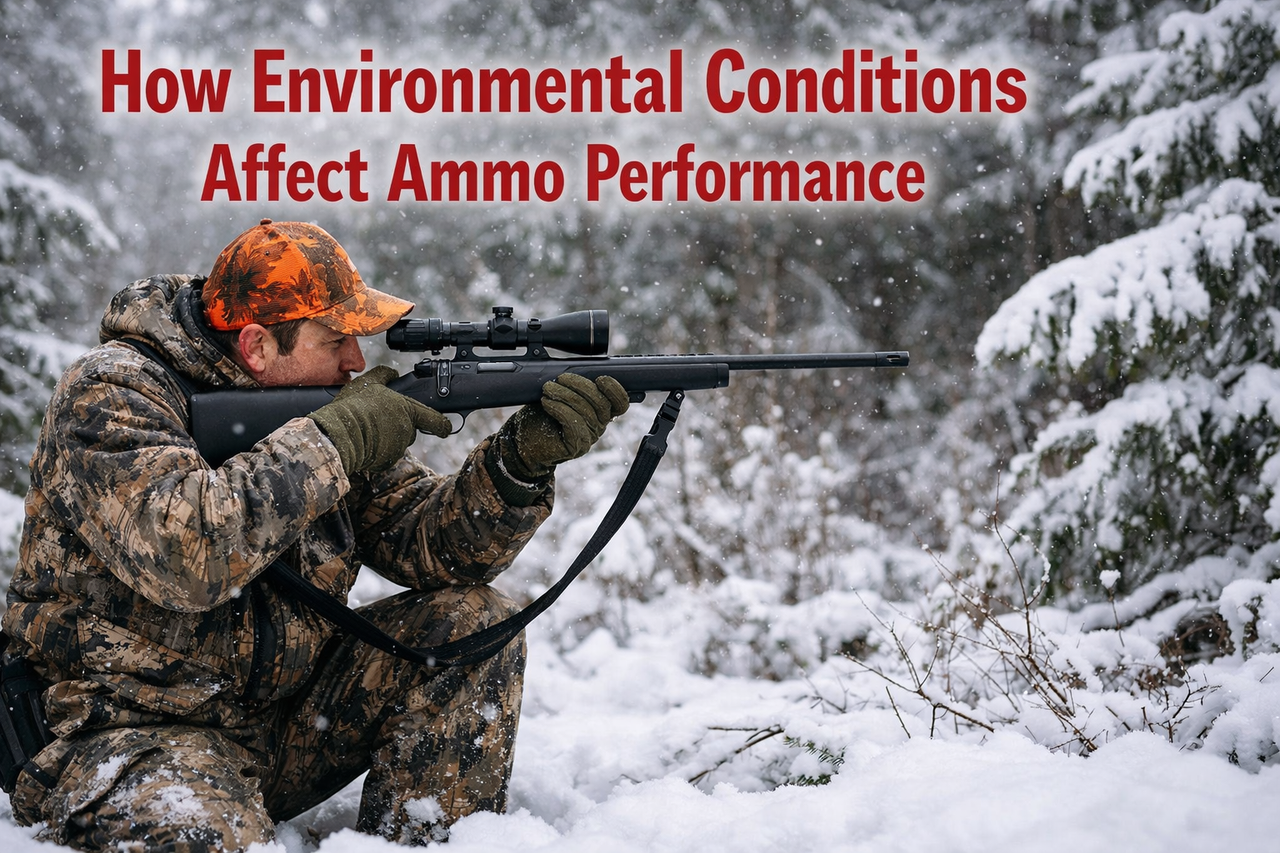
How Environmental Conditions Affect Ammo Performance
Jan 8th 2026
Ammunition performance isn’t just about caliber, grain weight, or velocity. Real-world conditions matter, and they matter more than most shooters realize.
Temperature, humidity, altitude, and storage environment all play a role in how ammo performs once it leaves the factory. Understanding these variables helps shooters make better decisions, maintain consistency, and avoid issues that only show up when conditions change.
Here’s what actually affects ammo performance, and why it matters.
Temperature: Hot, Cold, and Everything in Between
Temperature has a direct impact on ammunition, especially when it comes to pressure and consistency.
In high heat, propellants can burn faster. That can result in:
• Slightly higher chamber pressures
• Increased velocities
• Greater variation from shot to shot if the ammo isn’t formulated for stability
In cold conditions, the opposite can happen:
• Slower burn rates
• Reduced velocities
• In extreme cases, inconsistent ignition
Most shooters notice these effects when they zero a firearm in one season and shoot in another. What grouped tightly in mild conditions may shift when temperatures swing significantly.
This is why consistency and testing matter. Ammo designed and tested across varying conditions is far more reliable than ammo optimized for a narrow environment.
Humidity: The Silent Long-Term Risk
Humidity doesn’t usually cause immediate performance problems, but over time, it can.
Excess moisture can:
• Degrade primers
• Affect propellant stability
• Lead to corrosion on casings and projectiles
While modern ammunition is fairly resilient, prolonged exposure to high humidity, especially in poorly sealed containers, can compromise reliability.
This is particularly important for:
• Stored bulk ammo
• Ammo kept in garages, sheds, or vehicles
• Long-term emergency or training stockpiles
Proper packaging and storage are just as important as how the ammo is manufactured.
Altitude: Pressure, Air Density, and Ballistics
Altitude changes air density, which affects external ballistics.
At higher elevations:
• Air is thinner
• Bullets experience less drag
• Velocities are retained longer
• Trajectories can flatten slightly
At lower elevations, denser air increases drag, which can subtly change point of impact, especially at longer distances.
While altitude doesn’t typically affect ignition or internal performance, it absolutely affects how a bullet behaves once it leaves the barrel. Shooters who travel or compete in different regions often need to re-confirm zero or adjust expectations.
Storage Conditions: Where Performance Is Won or Lost
Ammo performance doesn’t end when it leaves the factory, it continues in how it’s stored.
Poor storage conditions can undo good manufacturing.
Best practices include:
• Storing ammo in a cool, dry place
• Using sealed containers or ammo cans
• Avoiding prolonged exposure to heat (especially vehicles)
• Keeping ammo away from direct sunlight and moisture
Even well-made ammunition can suffer if it’s stored carelessly for long periods.
Why Consistency Matters Across Conditions
Environmental variables are unavoidable. What separates reliable ammo from inconsistent ammo is how well it performs when conditions change.
Ammunition built with disciplined manufacturing processes, consistent components, and ongoing testing is far more likely to:
• Maintain stable performance across temperature swings
• Resist moisture-related degradation
• Deliver predictable results in varied environments
This is why serious shooters look beyond headline numbers and focus on consistency, quality control, and trust in the process behind the product.
Final Thoughts
Environmental conditions affect every round fired, whether you notice it or not.
Understanding how temperature, humidity, altitude, and storage influence ammo performance helps shooters:
• Train more effectively
• Store ammo responsibly
• Avoid reliability surprises
• Make informed purchasing decisions
At the end of the day, performance isn’t just about what’s printed on the box. It’s about how ammunition holds up when real-world variables come into play.
Consistency doesn’t happen by accident, and neither does reliability.