Best Practices for Long-Term Ammo Storage
Feb 20th 2026
Whether you’re stocking up for regular range sessions or building a long-term supply, how you store your ammunition matters just as much as the ammo itself.
Proper storage helps keep cartridges reliable, safe, and ready to fire when you need them.
Below, we break down what actually affects ammo longevity, and how to set up a storage system that keeps rounds in good condition for years, or even decades.
Why Good Storage Matters
Modern ammunition is remarkably stable and can last a very long time if cared for properly. But the materials involved; brass cases, powder, primers, and bullets, are all sensitive to their environment.
Exposure to heat, moisture, and extreme temperature swings can degrade powder and primer integrity, accelerate corrosion, and reduce reliability. Proper storage protects against these threats and helps your ammo maintain performance over time.
1. Choose the Right Environment
Keep it Cool and Stable
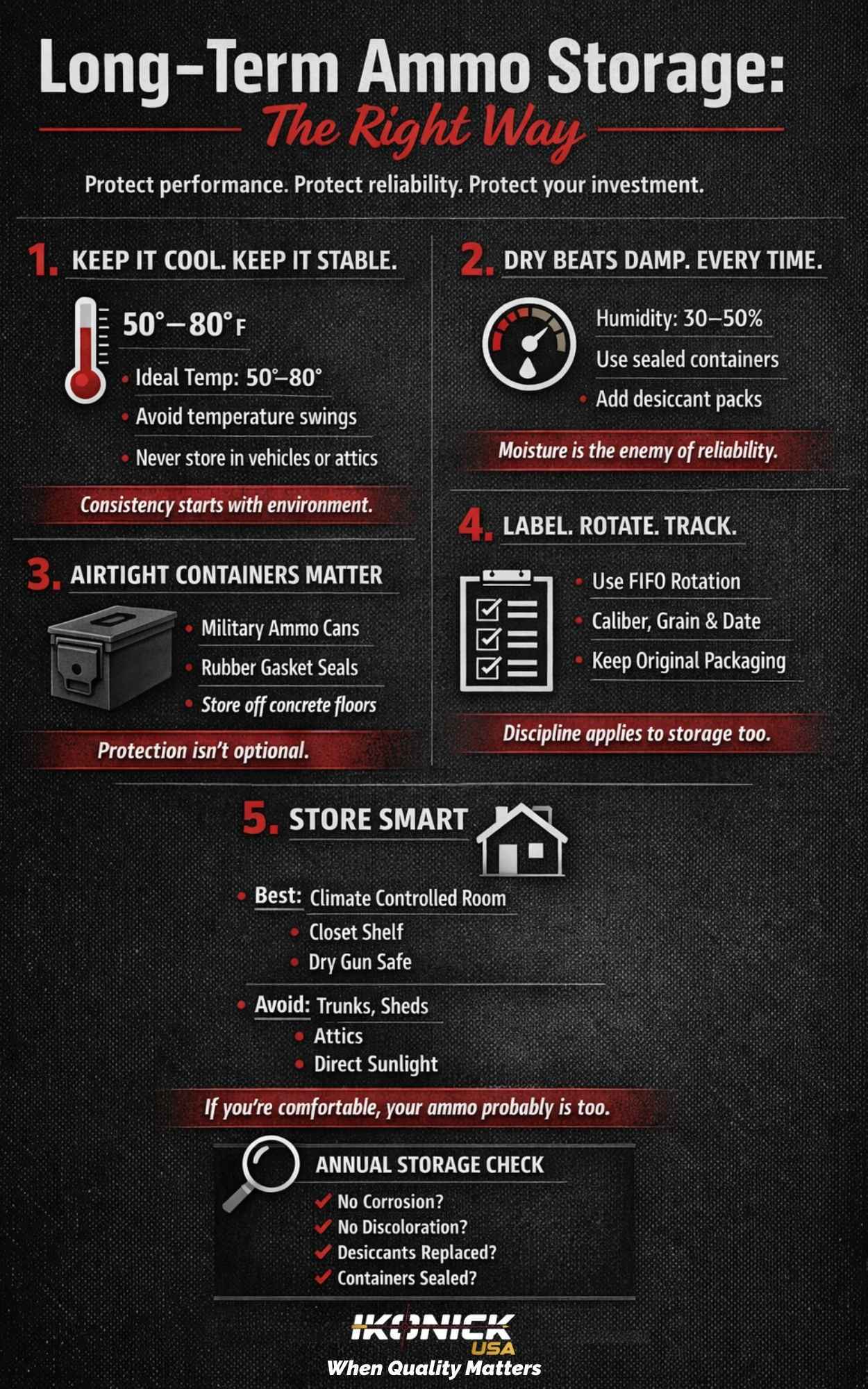
Ammo does best in environments with modest, steady temperatures; generally roughly 50–80°F (10–27°C) for long-term storage.
Extreme heat, especially repeated heat cycles, can accelerate chemical breakdown in powder and primers and reduce long-term reliability.
Frequent temperature swings, for example, moving from air-conditioned cool to hot attic heat, can also introduce moisture and condensation inside casings.
Control Humidity
Moisture is one of the biggest enemies of stored ammunition. High humidity can lead to corrosion of brass cases and can allow moisture to work into primers and powder.
Ideally aim for relative humidity in the 30–50% range. A dry, climate-controlled room in your home is often more than sufficient; a garage or unsealed basement is riskier without humidity control.
2. Use Airtight, Moisture-Resistant Containers
Even when the ambient room conditions are good, sealing ammunition in proper containers adds another layer of protection.
Ammo Cans and Storage Boxes
Military surplus ammo cans or commercially made sealed ammo containers with rubber gaskets are among the best options.
The airtight seal helps keep out moisture and pests. Plastic “dry storage” containers built for ammunition are also effective.
Desiccants Help
Including desiccant packs (silica gel or clay desiccants) inside your containers helps absorb the tiny amounts of moisture that can still get in. Be sure to replace them regularly, as they eventually saturate.
3. Keep Ammo in a Dark, Dry Location
Light itself isn’t inherently damaging, but sunlight brings heat and UV exposure, which can be harmful over time.
Storing ammo in dark or shaded areas reduces heat buildup and minimizes temperature swings. Avoid attics, uninsulated sheds, and vehicles, which can experience rapid heating and cooling cycles.
4. Store in Original Packaging (When Possible)
Factory boxes are designed to protect ammunition during transport and short-term storage.
If you’re planning long-term storage, keeping ammo in those boxes adds an extra layer of organization and labeling, making it easy to identify caliber, grain, and lot information years later.
For even more protection, keep those boxed rounds in sealed ammo cans or containers.
5. Practice Smart Organization
A good inventory system saves time and reduces handling, which can stress cartridges.
✓ Label everything clearly (caliber, grain, date, and lot).
✓ Use a first-in, first-out (FIFO) rotation so older ammo gets used before newer supplies.
✓ Avoid mixing types in the same container to prevent confusion.
6. Avoid Unsafe Storage Locations
Some places commonly used for storage are actually among the worst spots:
❌ Cars and trunk storage: Heat can easily exceed safe levels inside vehicles, even on mild days.
❌ Attics: They can routinely reach very high temperatures.
❌ Concrete floors or uninsulated basements: These can have moisture issues unless properly sealed and climate controlled.
✓ A good rule of thumb: if people are comfortable there, ammunition usually will be too.
7. Never Forget Safety and Security
Good storage isn’t only about longevity, it’s also about safety and responsibility:
✓ Keep ammunition locked and inaccessible to unauthorized users or children.
✓ Where practical, store ammunition separately from firearms.
✓ Follow all applicable local laws and safety best practices for ammunition storage.
8. Check Your Stock Periodically
Even with great initial storage, it’s wise to inspect your ammo every year or two:
✓ Look for corrosion or discoloration
✓ Check box seals and container gaskets
✓ Replace desiccants as needed
Regular inspections help catch issues long before you load rounds into a firearm.
Long Life Starts With Good Conditions
With the right environment, containers, and organization, ammunition can remain reliable for many years.
Cool, dry, dark, stable conditions with airtight storage containers and desiccant packs give you the best chance of preserving your rounds for long-term readiness.
Done right, long-term ammo storage is less about fear and more about preparedness, responsibility, and stewardship of your investment.