
The First 5 Rounds in Your Magazine: Why They Matter Most
Oct 9th 2026
The First 5 Rounds in Your Magazine: Why They Matter Most
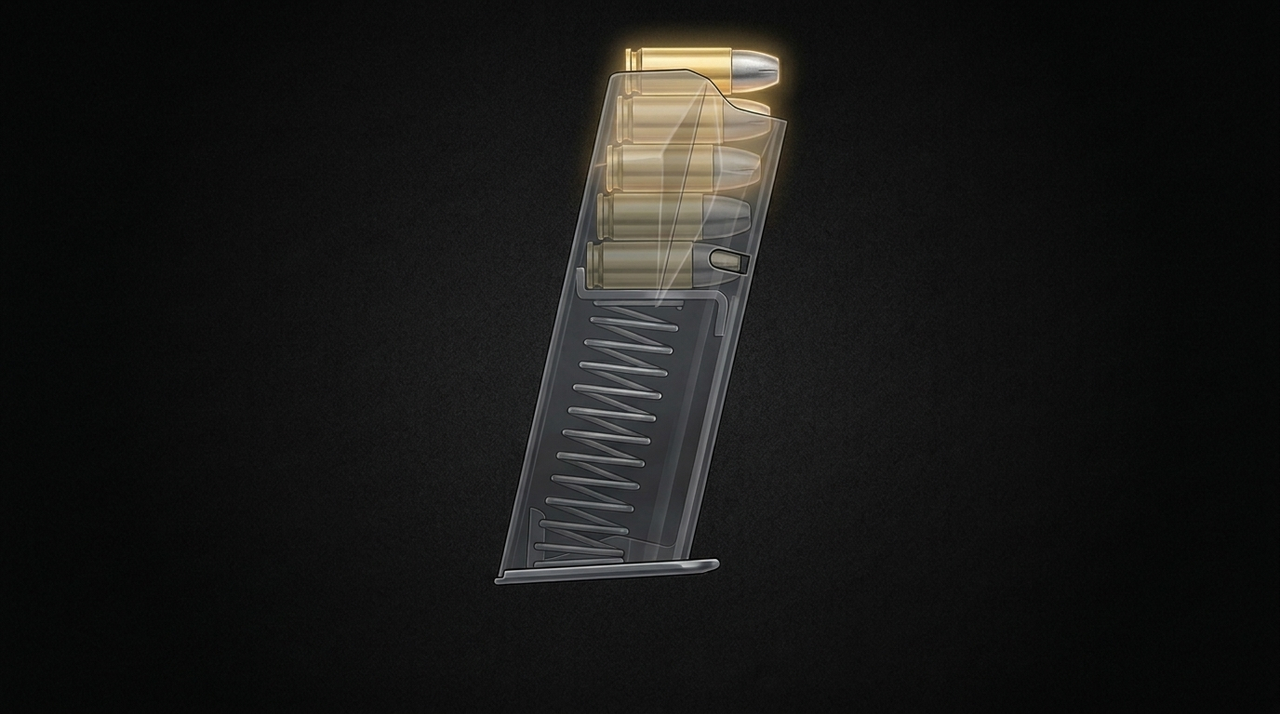
The Feed Lip Zone
The top two rounds in your magazine sit against the feed lips, the metal edges at the top of the magazine that control how rounds are presented to the slide. These feed lips take all the impact force every time the slide strips a round and slams it into the chamber. Over thousands of cycles, feed lips spread, crack, or deform. When they do, the top rounds aren't positioned correctly, and feeding failures follow.
The first round in the magazine is the most vulnerable to feeding issues because it sits at the highest point, directly under the slide. If the feed lips are even slightly out of spec, this is the round that jams.
The Magazine Spring Factor
A fully loaded magazine compresses the magazine spring to its maximum. The top round gets the most spring pressure, and that pressure directly affects how the round is presented to the slide for stripping.
With a fresh, properly tensioned spring, this works perfectly. But magazine springs fatigue over time, especially if left fully loaded for extended periods. As the spring weakens, it provides less upward pressure on the follower, which means the top rounds may not be positioned high enough for reliable feeding.
This is why some shooters download their magazines by one or two rounds for carry. A 15-round magazine loaded to 14 rounds reduces spring compression and can improve long-term feeding reliability. Whether this is necessary depends on your specific magazine design and how often you rotate your carry ammunition.
The Chambered Round
The first round in the system isn't in the magazine at all. It's in the chamber. And it has its own set of considerations.
Every time you chamber a round by racking the slide, the bullet impacts the feed ramp and the chamber walls. If you chamber the same round repeatedly (loading and unloading your carry gun daily), the bullet can be pushed slightly deeper into the case. This is called bullet setback, and it reduces the internal volume of the case, which increases pressure when the round is fired.
Minor setback (less than 0.05 inches) is generally within safe parameters. Significant setback (visible to the naked eye, or more than 0.05 inches) increases pressure enough to be a concern. Inspect your chambered round regularly. If you notice the bullet sitting deeper than an unfired round from the same box, replace it.
Round Rotation
If you carry with one in the chamber and a full magazine, the chambered round and the top round in the magazine get handled more than any others. Every time you unload for dry fire practice, cleaning, or storage, these rounds get cycled. The chambered round gets rechambered. The magazine rounds shift position.
The practical solution is to rotate your carry ammunition. When you unload for cleaning or dry fire, set the chambered round aside. When you reload, put a fresh round in the top position and cycle the previous top round to the bottom of the magazine. This distributes the handling wear across all your carry rounds rather than concentrating it on the same two or three.
Magazine Quality
All of these factors are amplified or mitigated by magazine quality. A quality magazine with properly hardened feed lips, a strong spring, and a smooth follower makes the first five rounds nearly as reliable as any other position. A cheap, worn, or damaged magazine makes the top rounds a liability.
If you experience any feeding issues, the magazine is the first thing to evaluate. Not the ammunition. Replace the spring first. If problems persist, replace the magazine entirely. Magazines are consumable items, not lifetime investments.
The Bottom Line
The first five rounds in your magazine occupy the most mechanically demanding positions in the feeding system. They're subject to the most spring pressure, the most feed lip interaction, and the most handling wear. None of this is a reason to distrust your magazine or your ammunition. It's a reason to maintain both.
Inspect your carry ammunition regularly. Rotate the rounds you chamber repeatedly. Replace magazine springs on a schedule. And pay attention to how the top rounds feed during your reliability testing.
The first round out of your gun is the one that matters most. Make sure it feeds.
Reliable Feeding From the First Round
IKONICK USA ammunition is engineered with a uniform profile designed for smooth feeding across all semi-automatic platforms. Consistent performance from the first round to the last.
Shop Ammunition